Monday, 7 June 2010

japanese vegetable hotpot (mizutaki)


serves 10 (generously)

SAUCE

2/3 cup lime juice (5 limes)

1 1/2 cup tamari

2 tbsp sake / sherry

1 cup finely grated daikon

4 tsp grated ginger

1 cup chopped green onions

TO DIP

2 md cabbage, cut in to ½ by 2 inch pieces (we used a variety of greens)

4 green onion bunches, cut in to 2 inch pieces

2 leeks, rinsed, narrow rings (discard dark green)

1 kg mushrooms, halved (use normal and all shitakes that we bought)

0.5 kg spinach, washed

1 tofu cake, ½ inch cubes

1 pound shrimp (should be raw, but we used cooked)

BROTH

3 cups water

8 inch konbu

Sauce: combine sake, tamari and lime juice (start with 2/3 and then add more to taste) and heat on low. Put dry ingredients in individual bowls. Add some of the sauce.

You need strong heat for this, stronger than the fondue we tried on the night. We have since done it with a table top hotplate and that rocked.

Start hotpot. Add konbu to cold water and boil, simmer for 2 minutes. Discard konbu.

With guests seated, add a little bit of each ingredient in the specified order. Then serve some people. Then repeat process. Order: leeks and tofu, then cabbage and mushrooms, then green onions, when nearly ready spinach (one minute only). Raw shrimp would have gone in first, cooked shrimp go in when serving. You can add rice to your bowl if you want to.


Saturday, 5 June 2010

Sushi


We made way too much on the day, so I tried to adjust the recipe for about 4 people. In the end, it is hard to guess the right quantities with sushi because it all depends on how yummy you make it, and whether you have any substantial sides.

Ingredients

1 1/2 cups of Sushi rice (do not use normal rice, it won't work). You need approx 1/4 cup dry rice per roll of sushi.

Sushi dressing: 3 tbsp rice vinegar, 1 tbsp suger, 1 tsp salt. Slowly heat vinegar and dissolve sugar and salt, do heat too much.

Step 1 (Early)

  • Wash sushi rice, drain in sieve and let stand for 1h

  • cook sushi rice, let stand for an additional 10 min

  • mix vinegar in and cool rice by spreading it out on a flat surface (cookie tray) and fanning it

Step 2 (Pre cooking)

  • make dashi (broth) from a 7 inch piece of konbu (japanese seaweed), simmer for 20 min

  • Cut 1 box of Portabello mushrooms in strips and fry with some garlic on medium heat.

  • make sushi style omelet, see below

  • cook edamame (young soy beans): Dump 1/2 bag frozen edamame in lg pot of boiling water, heat for 3-4 min, drain and sprinkle with salt

Step 3 (Cutting for sushi)

  • cut 2/3 cucumber in 4 inch strips

  • cut pickled 2 or 3 peppers in strips

  • cut 1 carrot in thin strips

  • cut 2/3 box of surimi (crab sticks) into strips

  • avocado: half, destone, strips, you probably need only half for the sushi but the rest tends to disappear anyway

  • cut some pickles into thin strips

Rolls that we will make:


California

Portabello

Veg

Edamame

avocado, surimi, cucumber, (sesame)

Portabello strips, (pickled bell pepper)

pickles, cucumber, avocado, daikon, sesame seeds, smoked salmon

surimi, edamame (whole)

NY - Smoked salmon

Carrot

Omelet


cucumber, cream cheese, smoked salmon

cucumber, carrot (cream cheese)

omelet, cucumber (mushrooms)


Sushi style omelet -Tamago yaki
Yield: 1 roll or sheet.

Beat four large eggs, 4 Tablespoons dashi (stock, see below), 1 Tablespoon sugar (or more to taste), 1 teaspoon mirin (sweet rice wine), 1/2 teaspoon soy sauce, and salt to taste. Strain as before. In a well-oiled tamago pan, pour in about a quarter of the mixture and spread as if making a crepe. As the mixture cooks, and as it bubbles and sets, roll it and move to the back of the pan. Reoil the pan and add more mixture, being sure to get some under the roll. Again, as it cooks, roll the roll to the front of the pan, then move to the back. Repeat until all the mixture is cooked. Remove the roll from the pan and roll as if for a sushi roll and squeeze out excess liquid. It can be rolled into a round or rectangular shape, then is sliced when cooled.


Friday, 4 June 2010

Lemon Meringue Pie


Ingredients for the base:
Plain flour - 200g
Butter - 100g
Sugar - 1 soup spoon
Vinegar - 1 soup spoon (not too full)
Eggs yolks - 1


Ingredients for the cream/filling:
Egg yolks - 2
Sugar - half a cup
Very thin flour - 1 soup spoon (or just do it with the plain flour)
Water - half a cup
Milk - 0.2 litres
Lemon - 1 big or 2 smaller ones


Ingredients for the meringue:
Egg whites - 3
Sugar - 90g


Base: Quickly mix all the ingredients from the base with your finger tips. Make a ball and let it rest for about 30 min. [If you wish to use a bit less butter, you might need to add another yolk.] After that time, cover a pie container with the dough. Pierce it with a fork several times and place it in a medium hot oven (c. 180C) for about 20 to 25 minutes.


Filling: You can prepare the filling while you are waiting for the base to rest. Mix the yolks, sugar, lemon juice and grated peel, milk and the flour mixed with the water in a pot ready for the hob. Turn the hob on and let it simmer until it thickens. Once it's ready, pour into the already pre-baked base.


Meringue: Whip the whites until very smooth and then add the sugar. Place it over the filling in the pie container. Spread some sugar on top and place everything in the oven for another 10 minutes.


Best served chilled.


Note: You might want to use baking beans in the oven: they help to distribute heat more evenly and keep the base flat.

Sunday, 9 May 2010

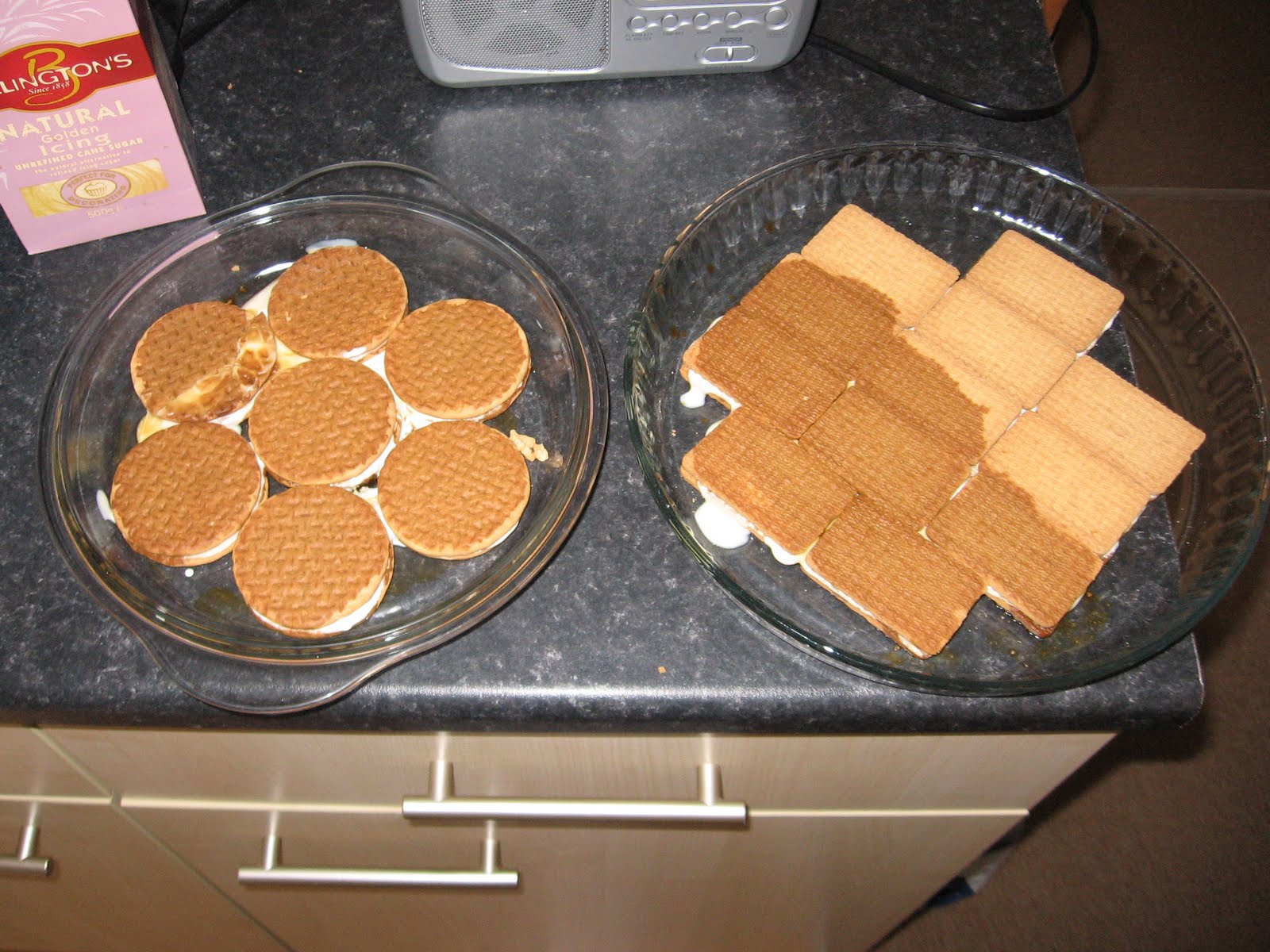
Buiscuit Cake


Here's the easiest 'cake' ever. Great for kids! [Unfortunately, somehow, I forgot to take a photo of the final product ;)]

Ingredients:
- Biscuits (traditionally Rich Tea, but I recommend the Malted Milk ones; you cab use other you like);
- Strong coffee (perhaps decaf is better if there are children); make it as strong as you like it but not too weak.
- 'Cream' (traditionally it is butter cream (butter and sugar), but I prefer either double cream with some (icing) sugar or even some vanilla yoghurt; not everyone is that fond of the yoghurt, though).


Start with a layer of biscuits. Place them as close to each other as possible. Soak them with coffee (use a spoon to pour the coffee on the biscuits and spread it a bit; repeat as often as necessary). Cover with a layer of your chosen cream. Repeat until you run out of ingredients, pour from extra coffee in the end, and make sure the last layer is cream. You can also put cream around it (on the sides) or decorate it with some powder chocolate, for example. Leave for a bit until everything soaks better. Keep in the fridge.

Wednesday, 17 March 2010

Pão de ló de laranja (Portuguese Orange Sponge Cake)


This can be served as a light treat or as a desert. It's best to only put a couple on a plate, otherwise you'll want to eat them all!! ;)

Isso pode ser servido como um lanche levinho ou como uma sobremesa. E' melhor colocar só alguns quadradinhos no prato, senão você vai querer comê-los todinhos!! ;)


Ingredients:(Ingredientes:)

8 eggs (8 ovos)
500 grams sugar (500 gramas açúcar)
250 grams flour (250 gramas farinha com fermento)
3 oranges (3 laranjas)
2 full teaspoons of backing powder (2 colheres de chá cheias de fermento em pó)

(Alternatively, if you want to make a larger or smaller amount, the eggs and the sugar must have the same weight, and the flour should be half the weight of the sugar.)

(Alternativamente, se você quiser fazer uma quantidade maior ou menor, os ovos e o açúcar devem ter o mesmo peso, e a farinha deve ser metade do peso do açúcar.)


Method:(Método:)

1) Turn on the oven to 375 degrees (gas mark 4). (Ligue o forno a 375 graus - gás 4)

2) Lightly grease cake pan well and cut some greaseproof paper to fit on the bottom and up the sides of the pan. (Unte bem o tabuleiro e ponha papel manteiga no fundo e nas laterais)

3) Seperate the egg whites from the yolk. (Separar as claras das gemas)

4) Mix flour with 2 large teaspoons of baking powder. (Misture a farinha com 2 colheres de chá bem cheias de fermento em pó)


5) Scrape off orange skin EXTREMLY thin and place into a bowl. (Raspe a casca da laranja em pedacinhos muito pequenos e coloque em uma tigela)

6) Squeeze the juice of a large orange. (Esprema o sumo de uma laranja)

7) Mix yolks with sugar and orange skins thoroughly. (Misture as gemas com o açúcar e a raspa da laranja)

8) Add sifted flour and orange juice in little quantities. (Adicione a farinha peneirada com o fermento e acrescente o sumo da laranja aos poucos)

9) Beat the egg whites until white and stiff, then SLOWLY add to the mixture. (Bata as claras até ficarem em ponto de suspiro e adicione-as DEVAGAR à mistura)

10) Pour into cake pan and place in oven. (Ponha a mistura no tabuleiro e no forno)

11) Before removing from the oven, squeeze another orange and add some sugar. (Antes de retirar do forno, esprema outra laranja e adicione açúcar a gosto)

12) Remove cake from oven when a toothpick comes out clean after inserting into cake. Add sugar + orange mixture over the cake whilst still hot. (Retire o bolo do forno depois que inserir um palito no bolo e ele sair limpo. Adicione a mistura de açúcar + laranja sobre o bolo enquanto ainda estiver quente)

13) Allow to cool and eat!!! (: (Deixe esfriar e coma!!!)


Monday, 15 March 2010

Pumpkin/Squash and Feta Gratin


This dish can be served either as a starter or as a main course (just bear in mind that you eat different amounts during each and that squash is relatively filling; I used a medium-sized squash and it was just enough for 4 persons although we probably wouldn't have minded stuffing yourselves just a bit more :P).

I am just copying the recipe from the cooking book I used, and adding a few personal comments.

Ingredients (serves 4-8):
2 kg (4 1/2 lb) winter squash - pumpkin will do, but butternut, red kuri, crown prince or onion squash are much better;
60g (2oz) butter;
150g (5 oz) Feta cheese, drained and chopped or crumbled [I suggest you just crumble it with your hands];
85 g (3 oz) freshly grated Parmesan cheese
110 g (4 oz) breadcrumbs;
3 tablespoons extra virgin olive oil;
salt and freshly ground pepper;
AND, my own addition,
about a handful of walnuts.

Halve the squash if it is a whole one, then remove the fibrous mass of seeds. Cut into long slices about 2.5-3.5cm (1-1 1/2 inches) thick [if you are using a whole sqaush you might also want to cut it in half length-wise]. You can cut the skin from the slices now, or after the initial cooking, which I think is marginally easier and quicker [I would actually say a lot easier]. Bring a large pan of salted water to the boil, then add the squash slices (you may have to cook them in two batches). Bring back to the boil and then simmer for about 5-10 minutes, until the flesh is just tender (but not soggy) [do really keep an eye on the time and test it with a fork]. Drain thoroughly, then remove the skin, if you haven't already [bleach the squash under some cold water if you want to cool it down quicker].

Pre-heat the oven to 200C/400F/Gas Mark 6. Use a generous knob of the butter to grease a shallow ovenproof dish (I use a 35cm/14 inch gratin dish). Arrange the squash in it, scattering the crumbled feta over the squash as you go. Dot with the remaining butter, then season with salt and plenty of pepper [tried with no pepper at all and it was still amazing :P]. Mix the Parmesan with the breadcrumbs [real breadcrumbs are better than the ones you find in British supermarkets]and scatter evenly over the squash [my advice: the more the better :)]. Drizzle the olive oil over the top. Bake for about 30 minutes, turning the dish around half-way through cooking if necessary [I have added some chopped walnuts to the recipe but I only add then half way through so they don't get too burnt], until evenly browned and crisp on top. Serve hot or warm.

Thursday, 18 February 2010

Banana pie

Dough:
1 cup of sugar
1 cup of corn flour
3 eggs
2 table spoons of butter
1 table spoon of baking powder
1 table spoon of ground cinnamon
2 and 1/2 cups of plain flour (or until the dough is ready to handle)
Filling: sliced bananas, 1 grated apple, 1 table spoon of cinnamon ground and 5 table spoons of suggar.

How to make it:
Mix all the ingredients from the dough. At the end, it should be consistent enough to handle. Using 1/2 to 2/3 of the dough, cover a buttered tray, making a base for the filling.


Then, in a bowl, mix all the ingredients for the filling and put it in the tray over the dough.


With the rest of the dough, make cords 0.5 cm thick (see pictures) to decorate the pie. Bake it for 35 minutes in 180 degrees.

Sunday, 24 January 2010

Chiles en Nogada (veggie version)

This vegetarian version of the classic Mexican dish (see wikipedia for history) is fantastic, if you ask me. The name means something like peppers with walnut sauce. Traditionally done with green peppers, so the display is like the Mexican flag (green, white, red).

A decent amount of work, but most chopping can be done while cooking, so it can be done quite fast once you have prepared it a few times.
  • 1 tofu cake (prepared, see below)
  • 2 medium onion, chopped
  • 1 tsp cinnamon
  • 1 tsp cumin
  • 1 tsp salt
  • 1/4 tsp red pepper / mild chili powder
  • 3 lg tomatoes, chopped (or can)
  • 2 small apples, chopped
  • 1/2 cup raisins
  • 1/2 cup almonds, chopped finely
  • 6 large bell peppers
  • 2 to 3 cups tomatoe juice
For sauce
  • 1/2 cup (145 ml) sour cream
  • 1/2 cup walnut pieces
  • 1/2 cup cream cheese
  • some milk
  • 1 tsp cinnamon
Prepare tofu: Freeze it overnight, then have it thaw. Squeeze out as much water as you can, then crumble tofu by hand. You should have something that looks like a white version of shredded beef (which it is replacing).

Saute onion, garlic and spices until done. Add tomatoes, apple, raisins; simmer for 8 minutes or so, until apple is soft. Add tofu, almonds, salt and simmer 10 more minutes.

Cut peppers in length through stem (use a very sharp knife) and clean. Fill peppers, place in baking dish and pour tomato juice around them. Cover dish with lid or foil, as tightly as you can. Bake at 200C for 40 minutes approx, check peppers to see if they are done. Too long is not a problem.

Mix all sauce ingredients together, add milk to right consistency (I like it thick) and let the flavor develop a bit. Serve sauce at room temperature.

Great with rice and a green salad.

Wednesday, 16 December 2009

Fatias do Bispo (Bishop's Sices)


Ingredients:
- Bread (a white baguette will do nicely);
- Eggs;
- Sugar;
- Lemon peel;
- Cinnamon;
- Water;
- Milk and Port Wine (optional).

1. Cut the bread in thick slices the day before so that it can dry a bit.

2. On the day, start by boiling some water with sugar and lemon peels. You will want quite a bit of water; I boiled probably around 3 litres and added around 200-300g of sugar to it or even more. It will be ready when it runs smoothly from your spoon [Can somebody else help me explain better how the texture looks like :) ?].

3. In the meantime, soak the bread slices in an egg mix (traditionally only the yolks would be used; I use the whole egg and usually add some Port wine in it; some people also add some milk). Turn the slices around and let them soak for a few minutes.

4. Allow the bread slices to boil in the sugary water, turning them around every now and then. 5 minutes overall should be enough.

5. Put them in a bowl and sprinkle them with cinnamon (you will want a considerably bigger bowl than the one in the big photo).

6. When all the slices have been cooked, pour the remaining water over them into the bowl until the slices are covered (so try to plan for this extra bit of water in the beginning).

7. These are better when eaten chilled. Once again, enjoy :)